hackathon recap: naPLari in Krakow, Poland in July 2026#
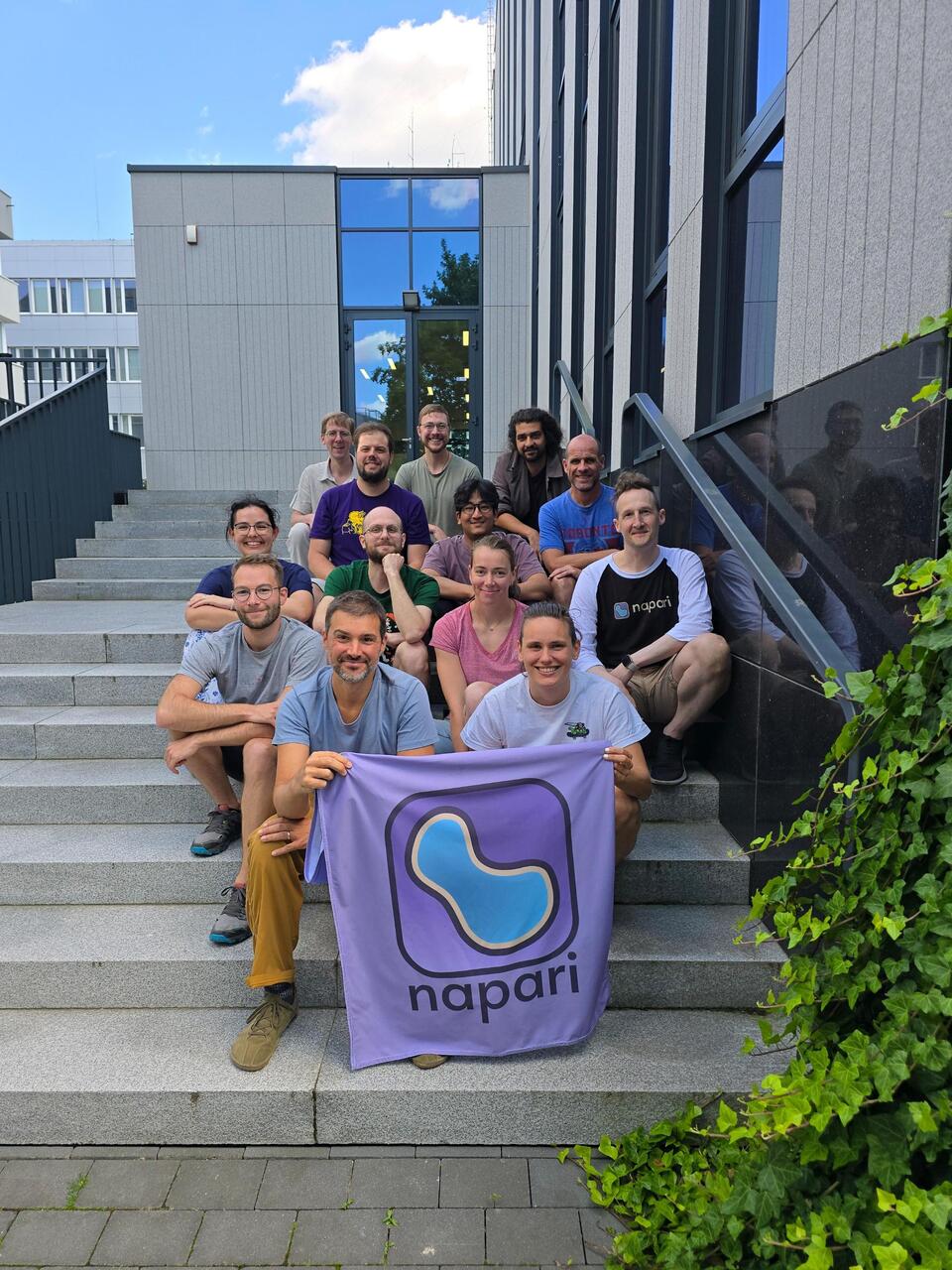
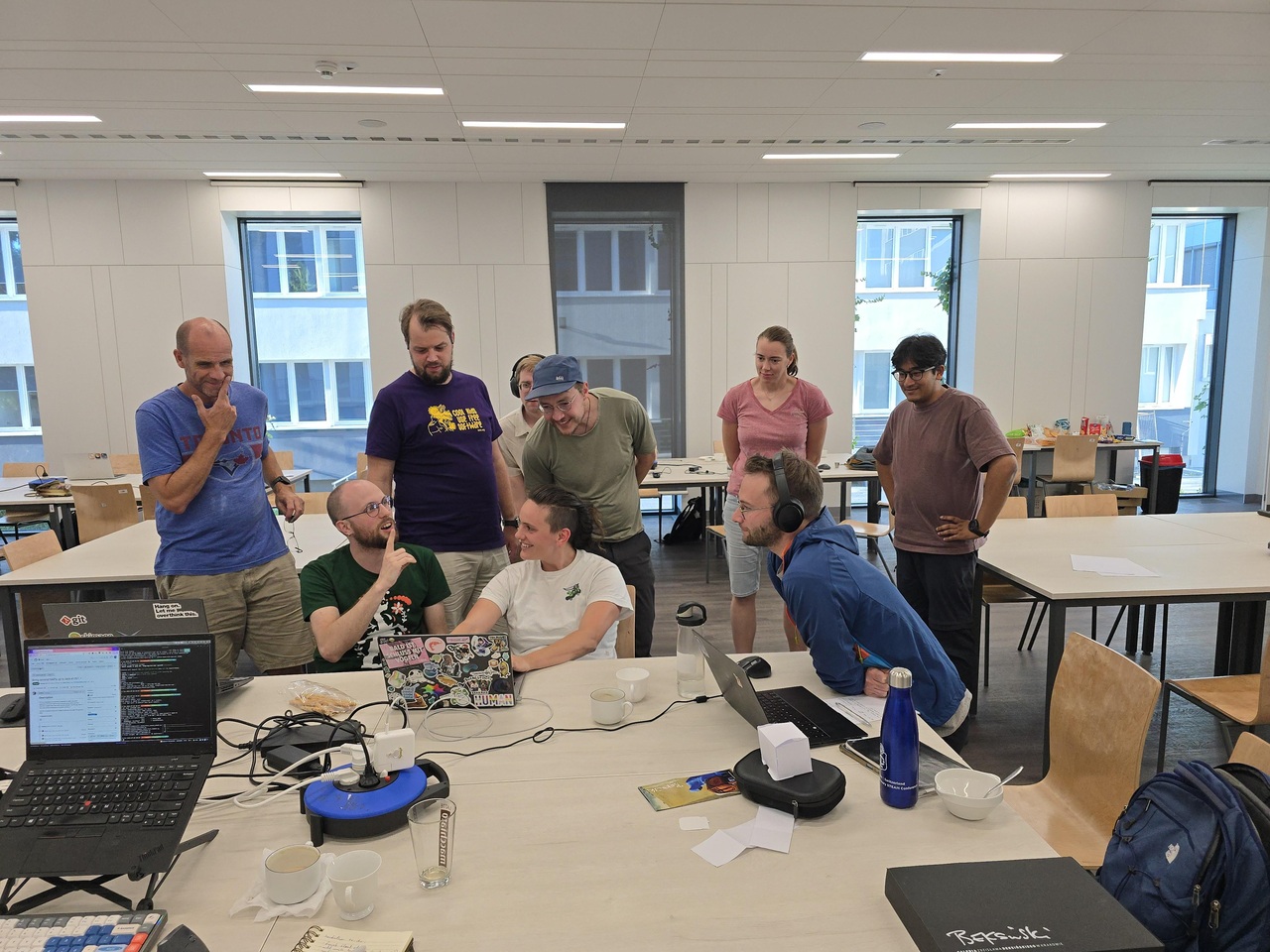
On May 21, we announced our second public hackathon, timed to coincide with EuroSciPy 2026 in Krakow, Poland. Six core team members and seven community members answered the call, and two months ago, we wrapped up one of the most productive weeks in napari development history! You can enjoy the fruits of our labor in napari 0.9.0, but do read on for a blow-by-blow, and, if it sounds appealing — we’d love to have you in the next one! — be sure to follow our updates on BlueSky, Mastodon, LinkedIn, or on our Zulip chat!
Setting the stage#
naPLari comes hot on the heels of our successful GloBIAS hackathon in October 2025, and included two repeat community participants, Aroj and Zuzana. (See below for some individual perspectives!) After GloBIAS, we knew we wanted to keep running these: they are a great way to focus energy, get a lot done in a short amount of time, and foster the community spirit that napari has become known for.
We knew a few people from the core team would be at EuroSciPy, so dovetailing on that conference might be a great way to save on travel — and environmental — costs. Thanks to long-time contributor and napari Developer-in-Residence Grzegorz Bokota, who led the conversations with the EuroSciPy organisers, we were able to find a great hackathon space in the AGH Faculty of Physics & Applied Computer Science buildings!
Working together#
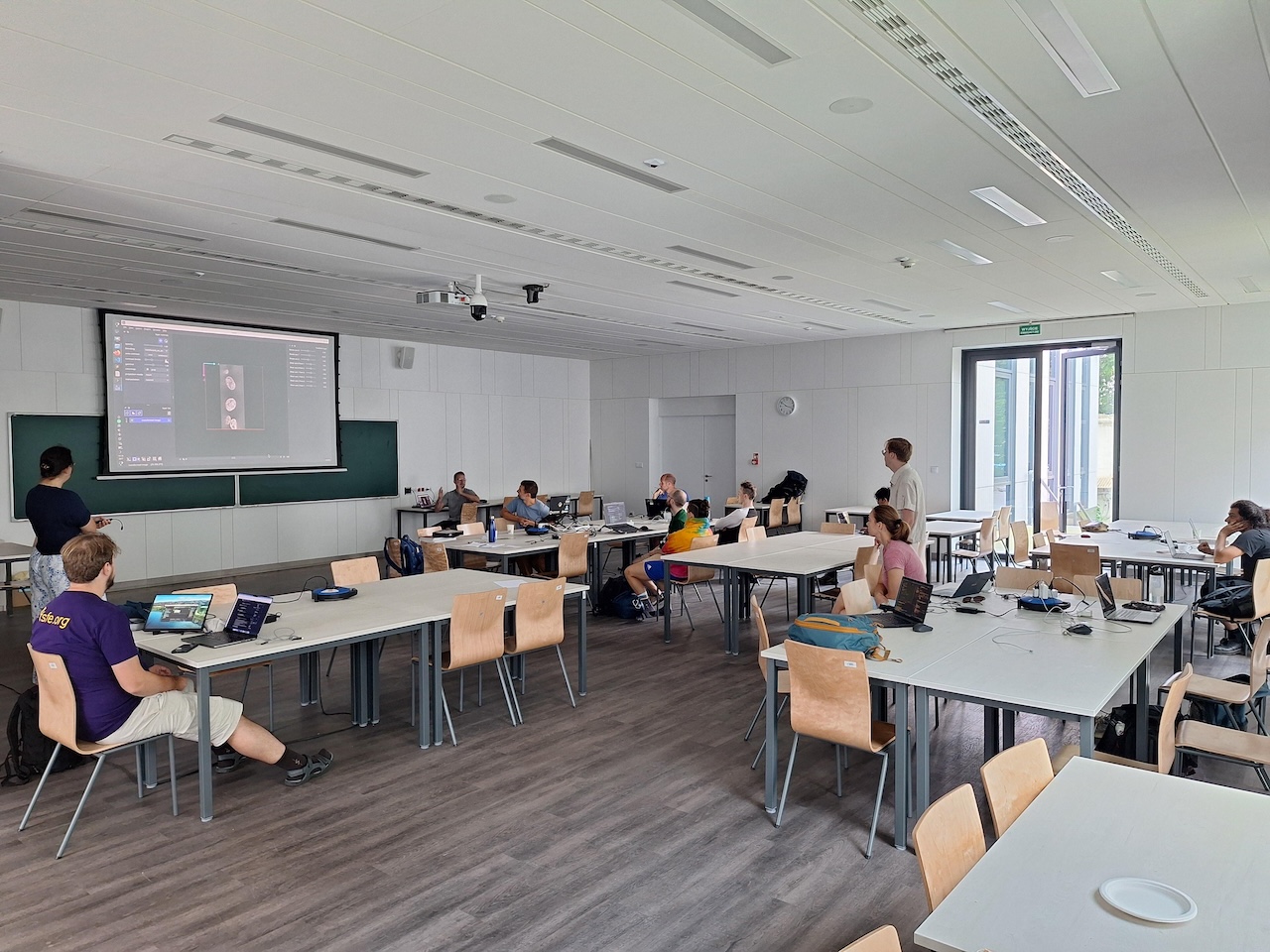
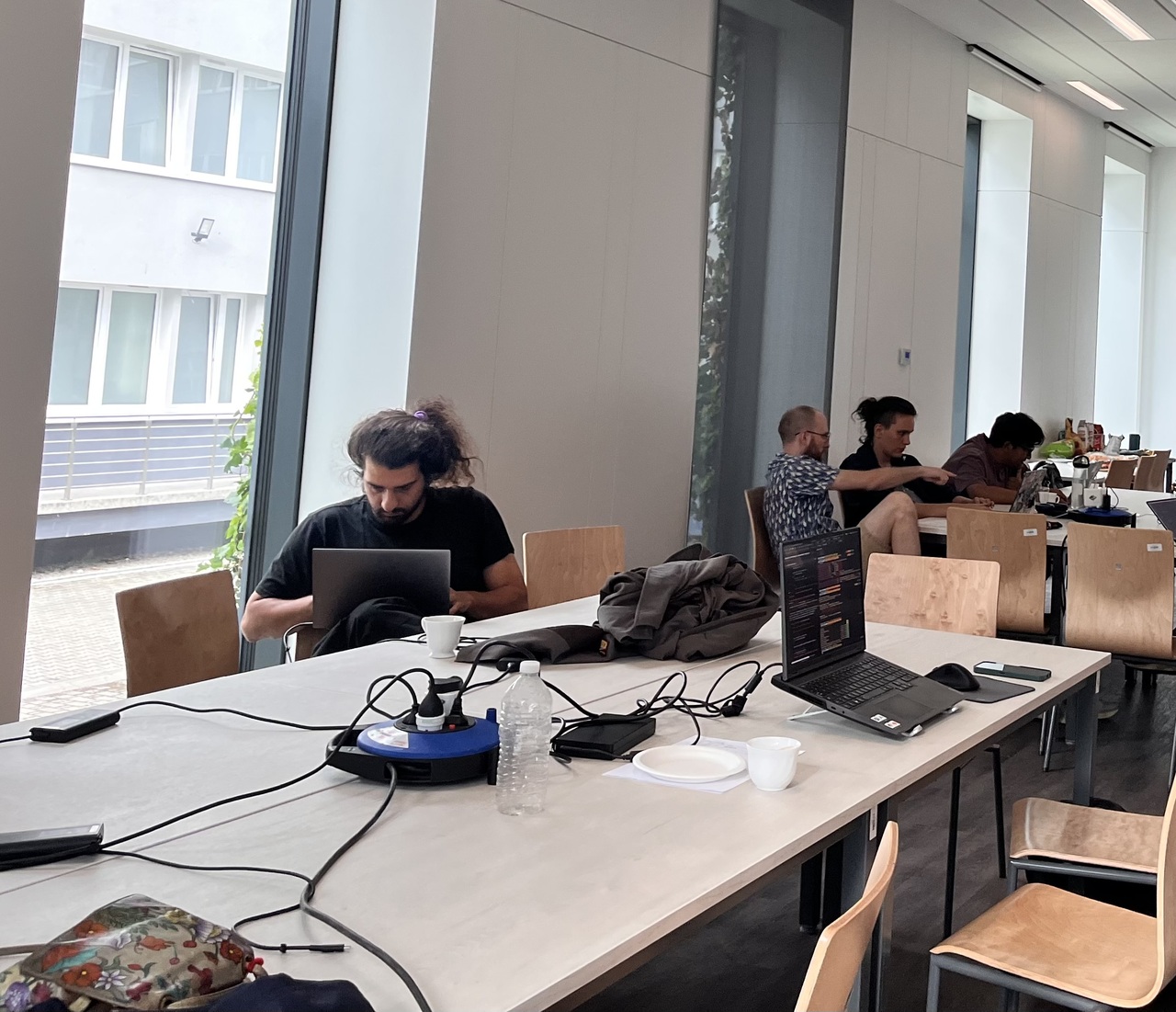
Writing code is often a solitary endeavour, particularly these days where remote work is common. And open source has a (good!) culture of asynchronous work, where one person writes code, submits it for review, and waits for someone else, often on the other side of the globe, to help improve it. Great things have been built with this model, and it has major advantages! But ultimately, you can’t beat the high bandwidth communication of being in the same room, both for technical discussion and for a sense of fun and camaraderie that you just can’t get on Zoom.
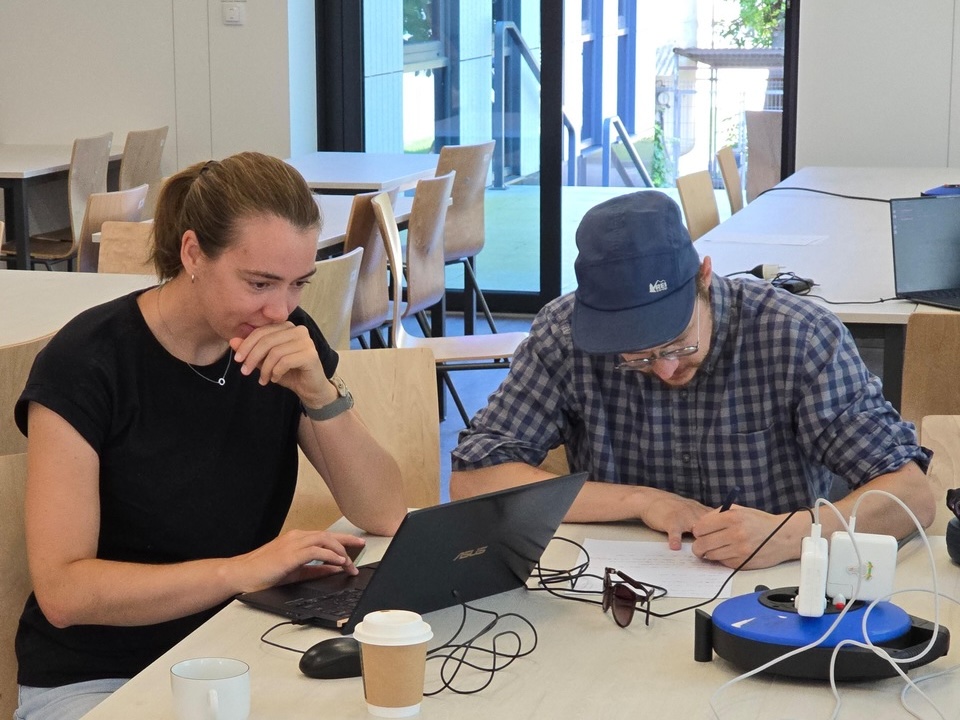
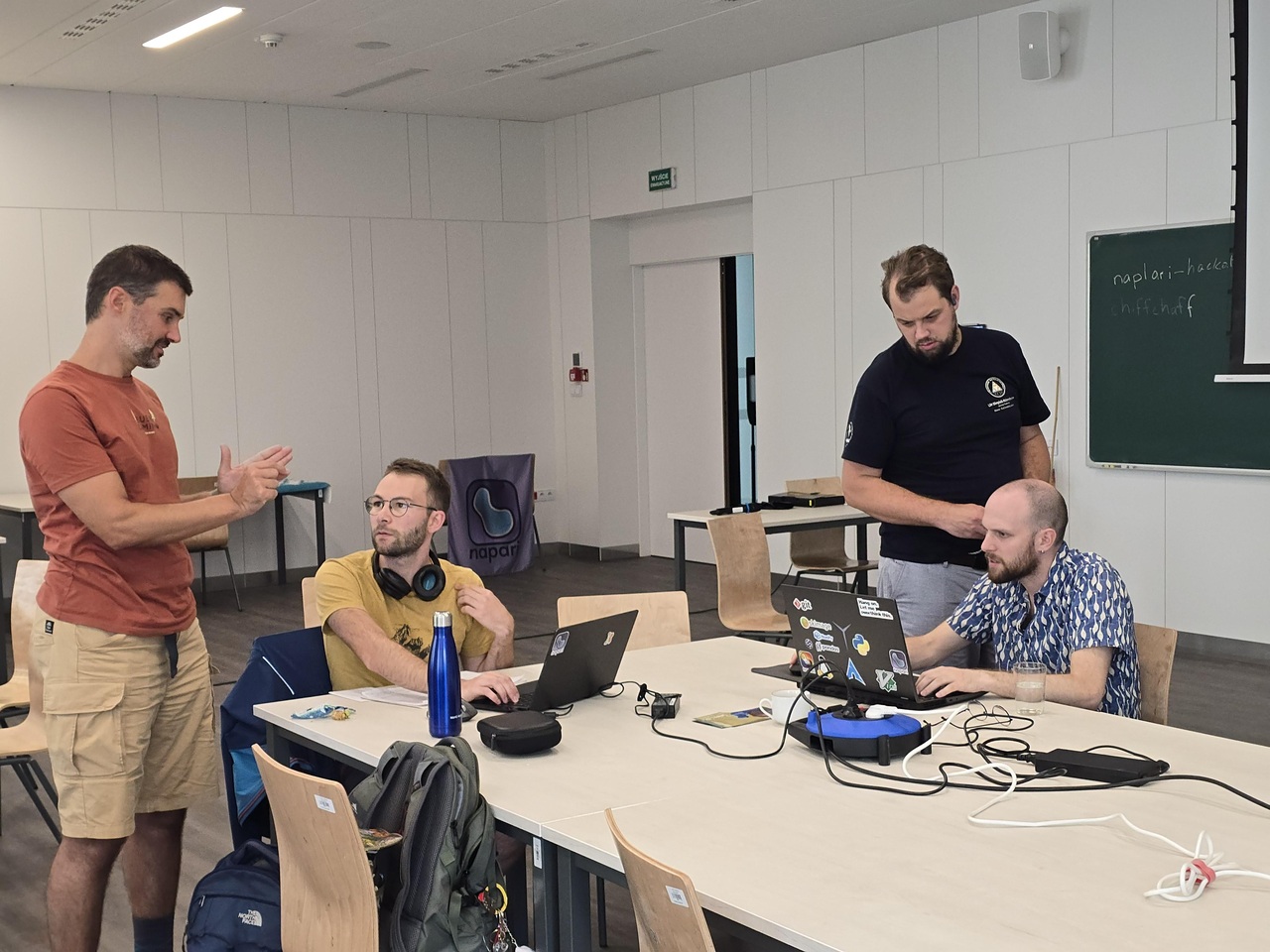
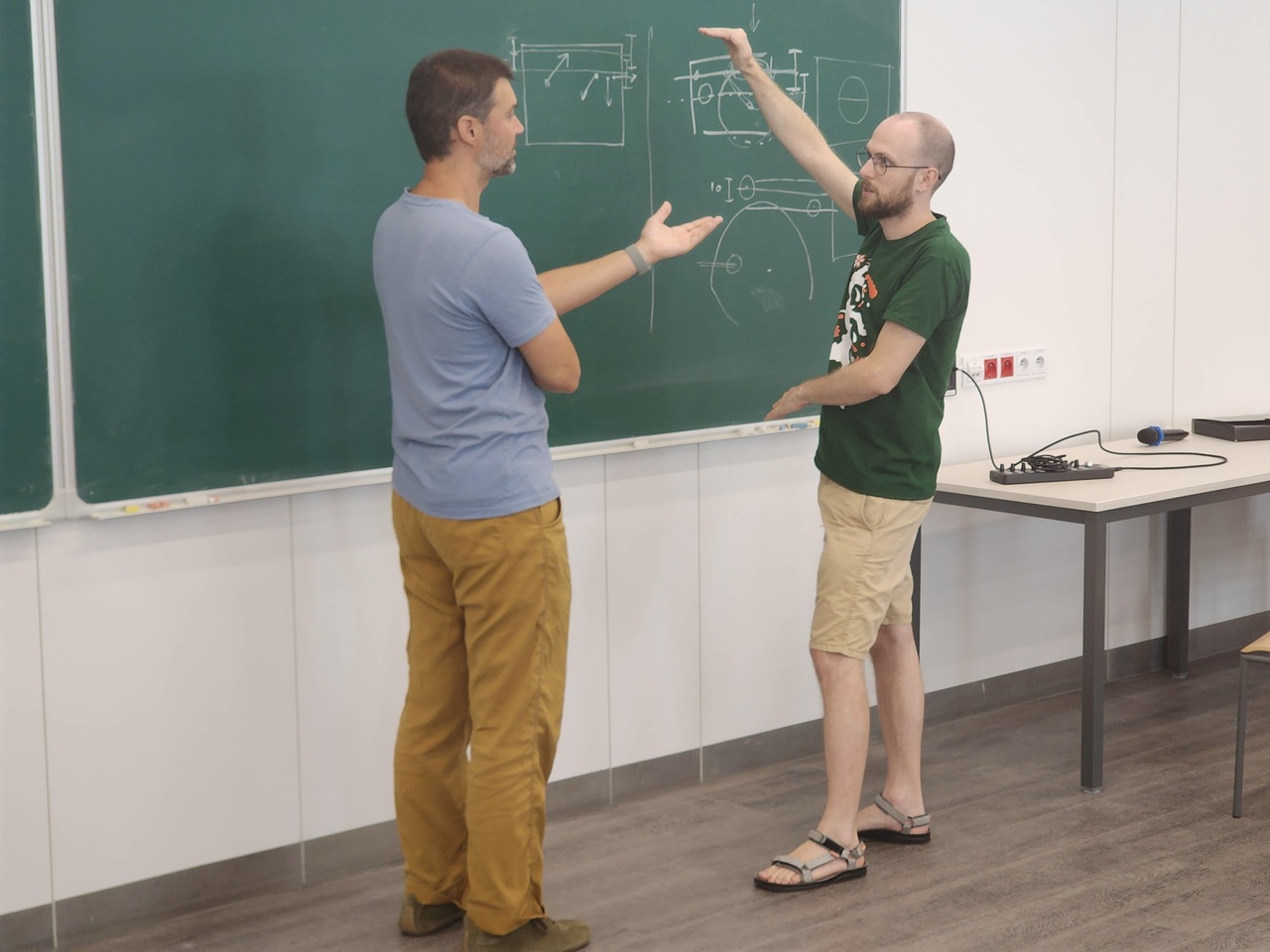
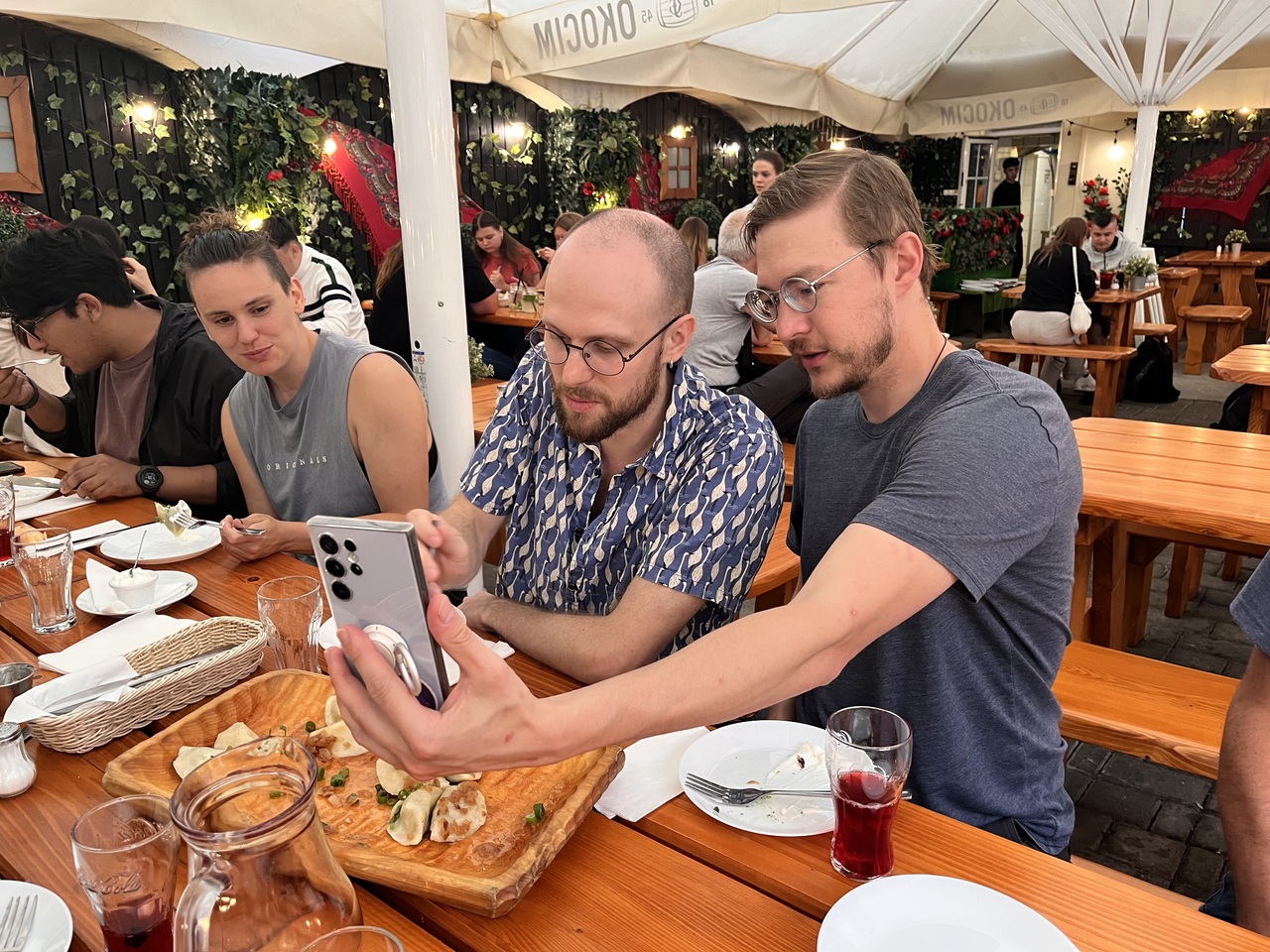
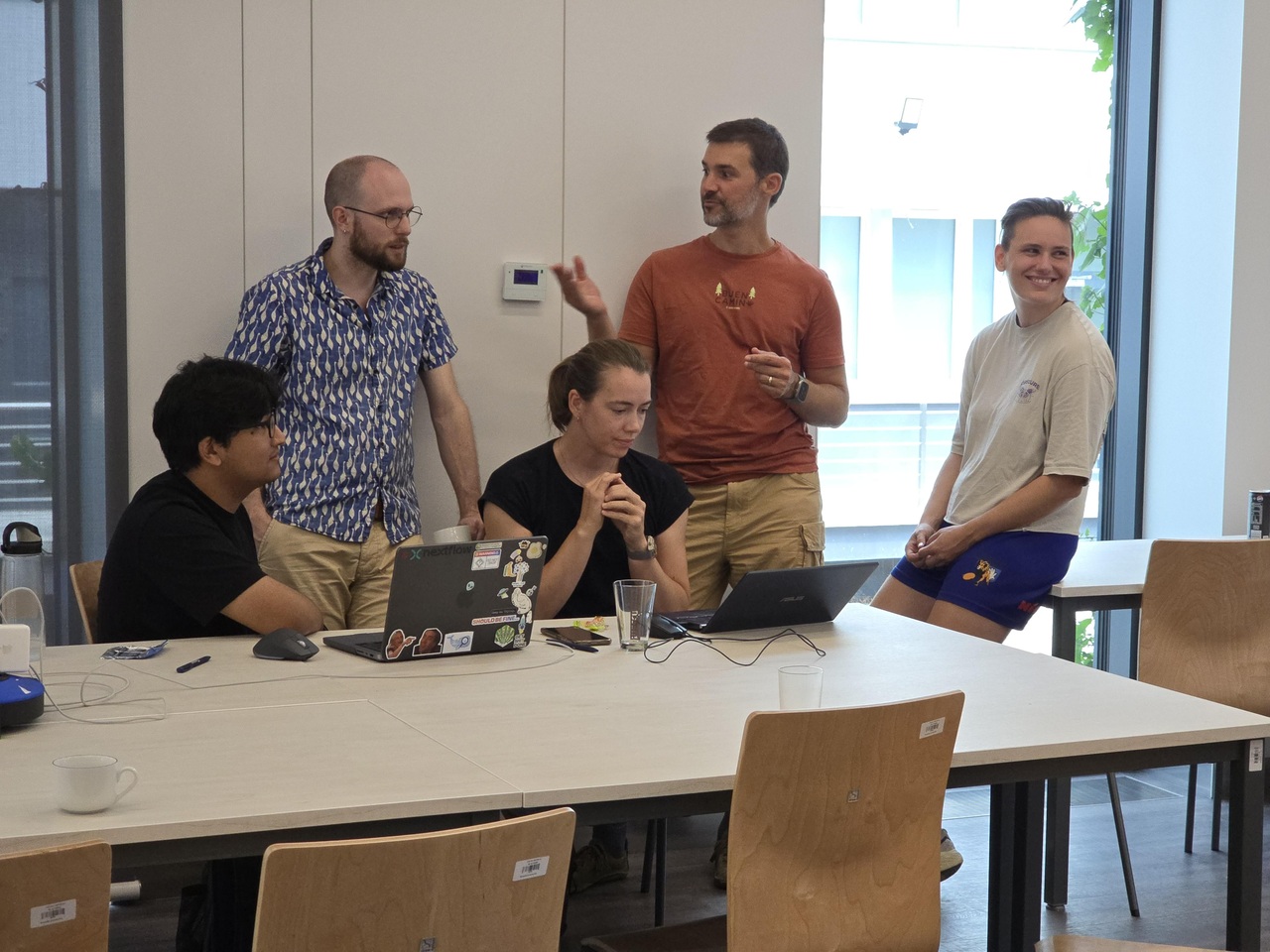
At the hackathon, we each had our own focus areas, but for each focus area, we had one or two “buddies” with whom we could always check in. This makes for rapid progress: it helps with decision paralysis, talking through thorny problems, and sharing expertise, among others. Typically, each buddy group had at least one member of the core team and one external participant.
We also did morning check-ins daily to catch people up on what we’d worked on the previous day, and plan for any group discussions needed to iron out some of the tougher challenges!
Feature highlights#
So what good was it? Here’s some of the stuff we got done.
Auto-labelling of viewer axes#
Zuzana Čočková and I started making napari more faithful to layer metadata, with axis labels on layers being correctly displayed on the viewer for the first time. This is really important because reader plugins don’t have access to the viewer, so they couldn’t set the axis labels, even if they could correctly read them from the source file. Now, if a reader sets the axis labels on a layer, the viewer respects and displays them!
napari displaying a 5-dimensional multichannel array, with all axes correctly labeled.
Automagic reading of Xarray metadata#
Tim Monko was then able to build on that work and close napari issue #14!!! That’s not a typo, one-four! This is a brilliant continuation of the napari+xarray work Tim and Ian Hunt-Isaak kickstarted at the SciPy 2025 conference.
napari displaying an xarray-based climate dataset with correctly labeled axes and units.
Plugin settings#
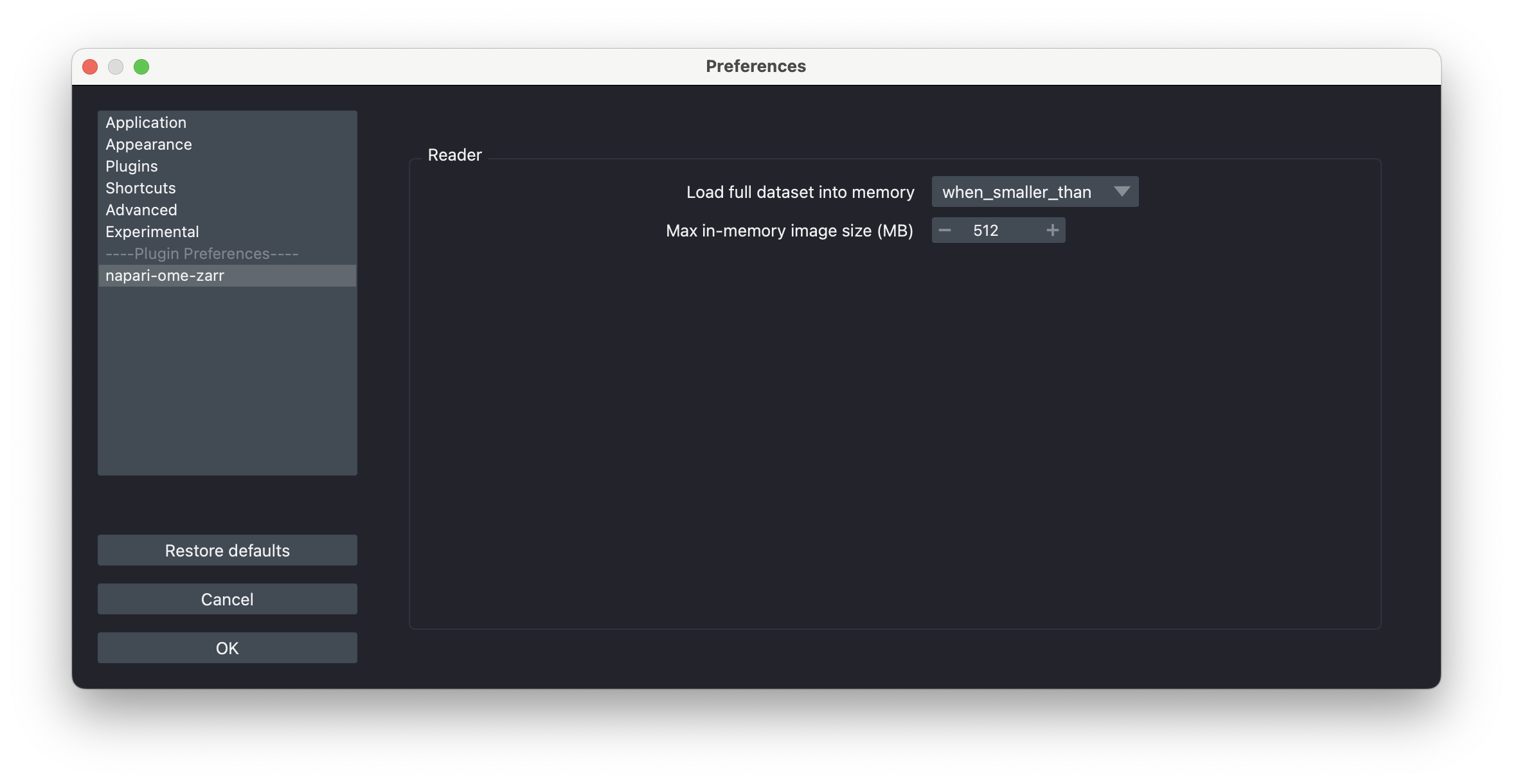
Ever since the dawn of plugins, plugin authors have wanted to persist user preferences to disk. Of course, this is Python, anyone can make something that works. But, at the hackathon, Giannis Liaskas and Draga Doncila Pop built on earlier work by Talley Lambert and Nathan Clack to create a spot for plugins to declare preference settings and an automatically generated UI panel for users to set the preferences within napari. Try it out!
Coming soon: slicing with non-orthogonal transformations!#
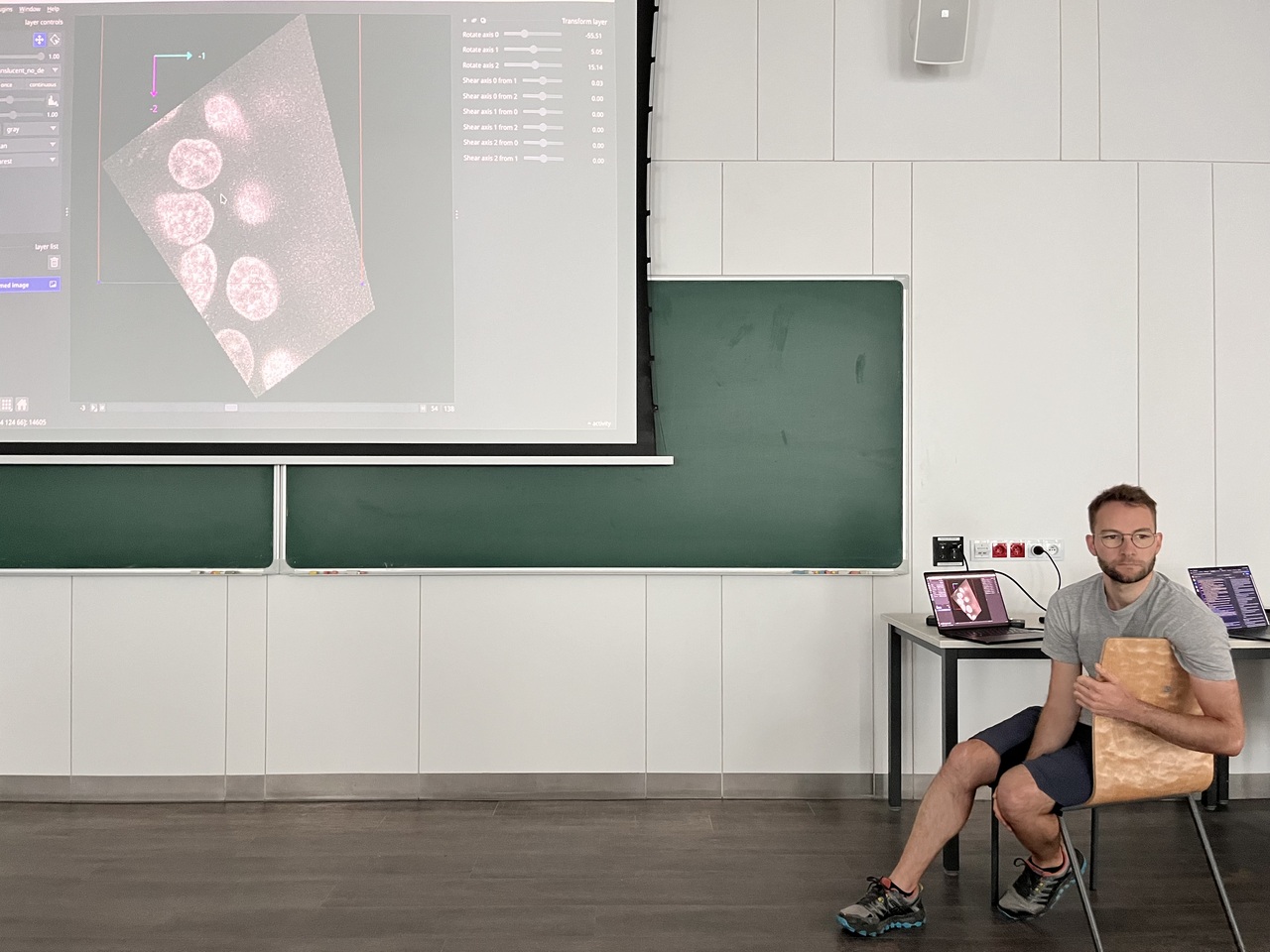
If you ever tried to look at 3+D data with any kind of out-of-plane rotations or other transformations, you’ll know that napari just ignores the out-of-plane component. That will be a thing of the past once Jules Vanaret’s non-orthogonal transformations PR is merged!
This will be incredibly, cough, transformative, cough for viewing lattice light sheet data, for example, which is displayed skewed in napari in 2D, or for 3D registration data, as displayed by OME-Zarr 0.6 datasets.
Auto-generated layer controls#
Margot Chazotte, like many others before her, was annoyed at having to change some layer settings, such as contrast limits, separately on each individual layer. With Lorenzo Gaifas’s help, she developed a system that builds the layer controls dynamically when one or multiple layers are selected, based on their common attributes. You can now change the contrast limits on many layers at once, for example! Or make several layers invisible/visible/translucent.
We didn’t have much time for testing and refining, so it’s labelled as experimental for now, but you can use it today and it will be the default shortly!
Since napari 0.9.0, you can adjust parameters of multiple layers at once.
Isolated plugin functions#
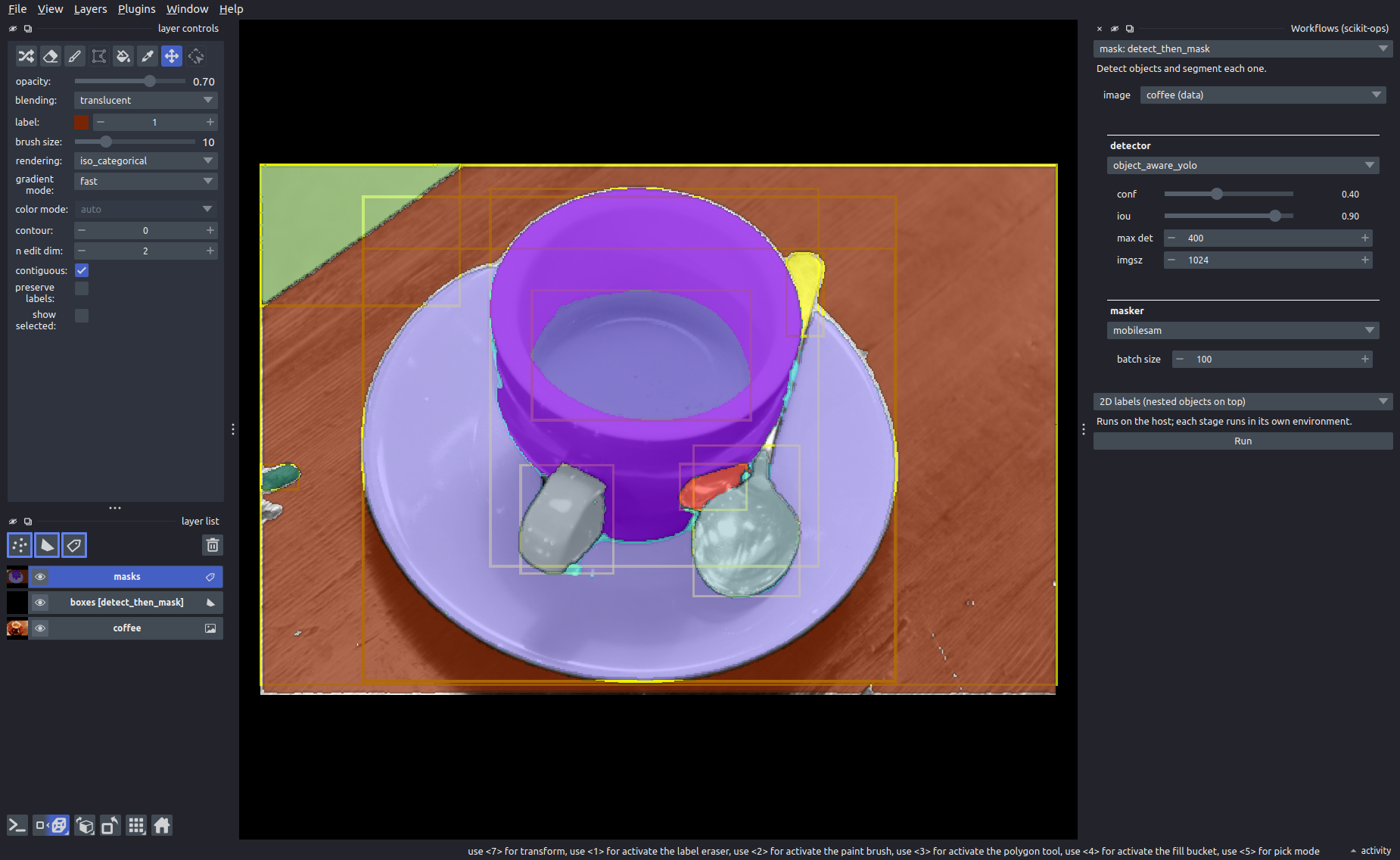
Curtis Rueden, of Fiji fame, and Brian Northan, famous for his deep dives into user questions on image.sc, recently joined the napari Steering Council (about which we feel very lucky!), and joined us also for the hackathon. They brought their full cross-platform, cross-language, user-centric expertise to bear, and developed scikit-ops, a library to define image processing and analysis functions that run on isolated environments.
If you use a plugin that defines Ops (roughly: annotated functions describing both their input and output types, and their dependencies, such as TensorFlow 1.15 in Python 3.8), you will never again run into environment conflicts: Ops use Appose to create their own conda environment, then run the function in that environment without copying the array data.
The really cool thing about Ops is that they can be called from both Python and Java, so plugin authors can write once and then have their functions usable from both napari and Fiji!
Individual thoughts#
It’s really hard to write collectively! So we thought we’d give a space to our hackathon contributors to share their individual perspectives. We asked participants for their thoughts on these two questions:
What made you decide to attend the hackathon?
If you were attending another hackathon soon, what would you want to work on?
Their answers below have been lightly edited for length. We hope they inspire you, Dear Reader, to think about why you might come to the next hackathon, and what you would want to improve in napari when you do!
Brian Northan#
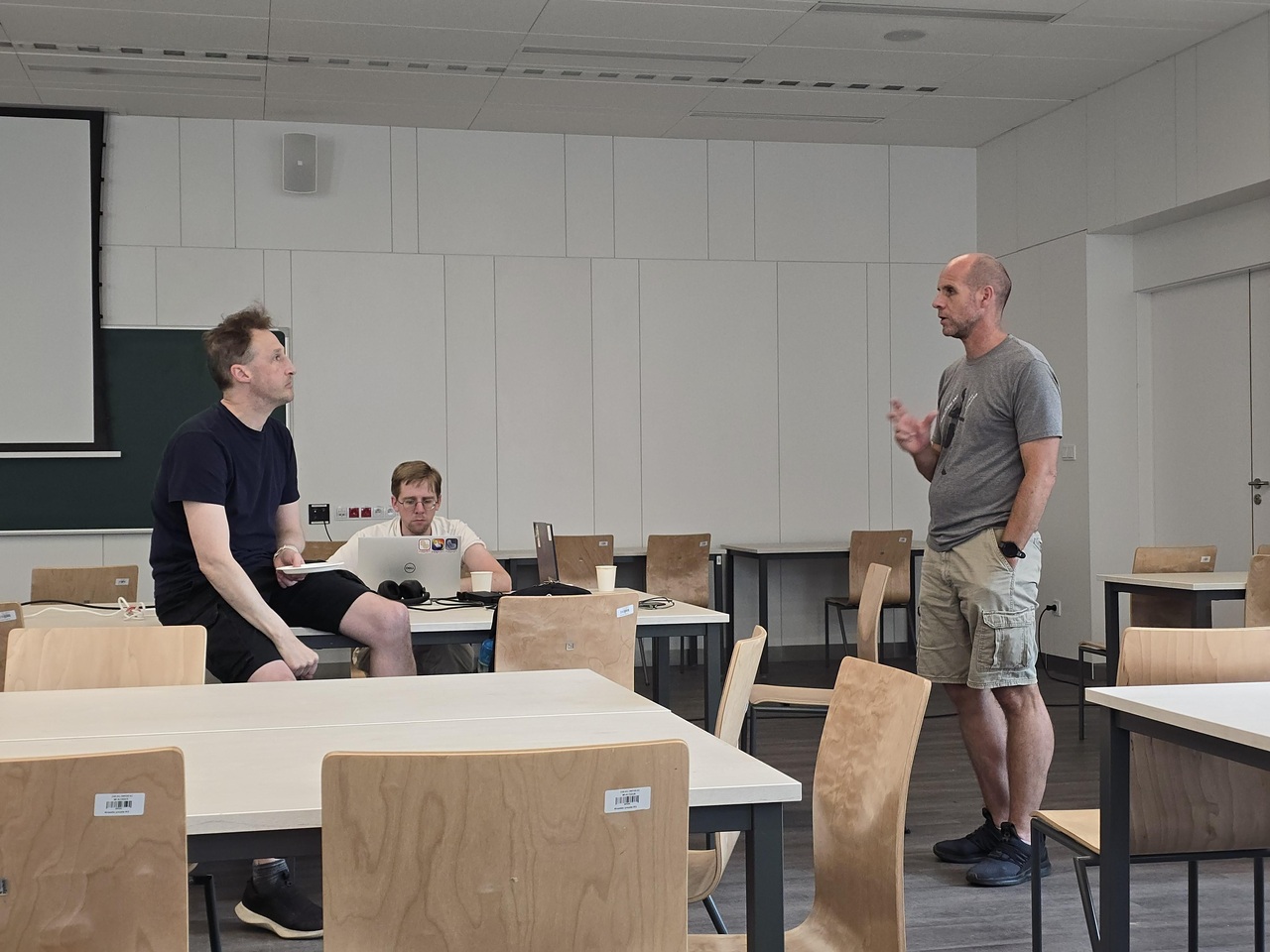
I have been using Napari for a few years now to visualize deconvolution and segmentation results and to label training data for deep learning. One complication I face is running different deep learning frameworks (like Stardist and Cellpose) in the same application or workflow, so I was motivated to come to the hackathon and work on solutions for this.
I want to work on the napari plugin ecosystem. At the hackathon, we created a prototype framework to call image analysis functions in isolated environments. I want to explore how plugins could define environments in the napari plugin manifest, and map functions to those environments.
Jules Vanaret#
I thought the hackathon would be a great place to get feedback on contributions I am interested in, plugins I’m working on, and the future of napari. It was also a great occasion to learn about good open source practices.
In the future, I’d love to make all non-raster layers (points, shapes, vectors…) work faster with large datasets, especially Shapes, which I am using a lot these days.
Zuzana Čočková#
I attended the previous hackathon at GloBIAS in Kobe, Japan, which was an amazing experience. As an image analyst, I use napari regularly in my work, and I am still curious to learn more about the contributor side rather than only as a user. Being relatively new to open source contributions, the hackathon is a great place to learn and gain confidence as a contributor.
I’m interested in continuing to work on axis-label related topics. I would enjoy brainstorming on how napari should handle multiple datasets with different axis orders or axis labels, and giving users more control over which dataset axes are mapped to viewer dimension sliders.
Margot Chazotte#
I wanted to learn more about contributing to napari and there is no better place for that than at the hackathon. I have been using napari for a long time now and recently started dipping my toes into contributing. The core team has been incredibly welcoming and nice so I was super stoked about a chance to meet them in person and hang out. Also this gave me the chance to add things to napari that I’ve been wanting as a user!
I’d love to keep working on the dynamic layer controls to help them get out of experimental mode! They’re a super fun new feature and I’m very proud to have been a part of making it happen!
Giannis Liaskas#
I wanted to meet the people behind napari and interact with them. I got a far better insight of how software development works: I had never worked on such a big project before and it was fascinating! After attending, I felt far more comfortable joining community meetings and talking in the group chat!
It’s too early for me to say what I would like to work on next, as the development of napari is so fast! Certainly, I would like to work again on the inner machinery of napari though!
With thanks#
Venue hire, travel for our core team members, and food, snacks and coffee were funded by CZI’s scaffolding grant to napari (CZI SVCF grant 2024-355351). We gratefully acknowledge their support!
We also would like to acknowledge the support of the labs and institutions for our not-yet-core 😉 participants. It’s relatively poorly understood that almost none of the napari core team, and very few of our 200+ contributors, actually come from a software engineering background. We all have research backgrounds, in which papers are king and time spent debugging is often considered wasted. (Especially time spent debugging someone else’s bug!) But we came together out of a shared sense of purpose, and even pride, in producing software that benefits others, and the research enterprise as a whole. And many of us have stories about a supervisor who thought all this was a waste of time.
So, again, a huge Thank You 🙏 to all the PIs and lab directors out there who Get It, and who support their staff collaborating for the benefit of all! 🎉
Looking forward#
As mentioned at the start of this post, we’re going to keep running these. If you’d like to be notified of the next one, please get in touch! You can email us at info@napari.org, or join our Zulip chat. And, if you would like to host one, please let us know also! We’re actively looking to run local hackathons around the world, and it would take little activation energy for us to run one at your institution!